Why Your Camp Counselor Might Mention a Lump
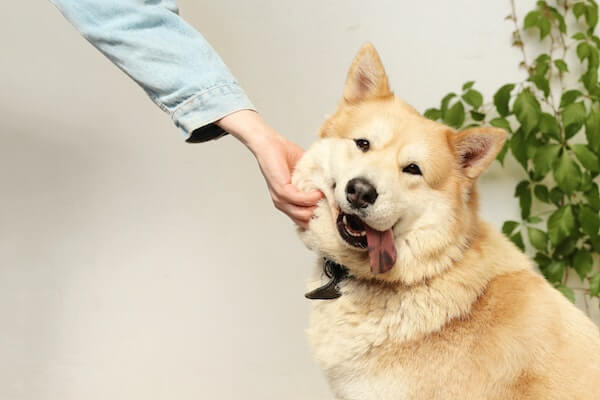
Dogs at camp get a lot of hands-on attention. Between belly rubs, leash-ups, ear scratches and towel-offs after a romp, our counselors touch a lot of fur in a day. Every so often, a counselor’s hand finds something new: a small bump on a shoulder, a soft lump along the ribs, a swelling under the jaw.
When that happens, you’ll hear from us. Here’s why, and what it means.
First, take a breath
Most lumps on dogs are not cancer. One of the most common finds is a lipoma, a soft, benign fatty mass. A large Royal Veterinary College study of more than 384,000 dogs found that about 1 in 50 dogs is diagnosed with a lipoma in a given year, and older and heavier dogs are much more likely to have them.
So when a counselor mentions a lump, it’s not a diagnosis. We’re not veterinarians, and we’ll never guess at what something is. We just want you to know it’s there.
Why we speak up anyway
Cancer is common in dogs. According to the American Veterinary Medical Association, about 1 in 4 dogs will develop neoplasia (an abnormal growth of cells) at some point in their lives, and almost half of dogs over 10 will develop cancer.
The good news is that timing matters, and it often works in your dog’s favor. Veterinary oncologist Dr. Sue Ettinger notes that most skin and under-the-skin tumors can be cured with surgery alone when they’re found early, while they’re still small. The American Animal Hospital Association adds that about half of all canine cancers are treatable if caught early enough.
A lump you know about is a lump you can do something about. That’s the whole reason we mention it.
The “pea and a month” rule
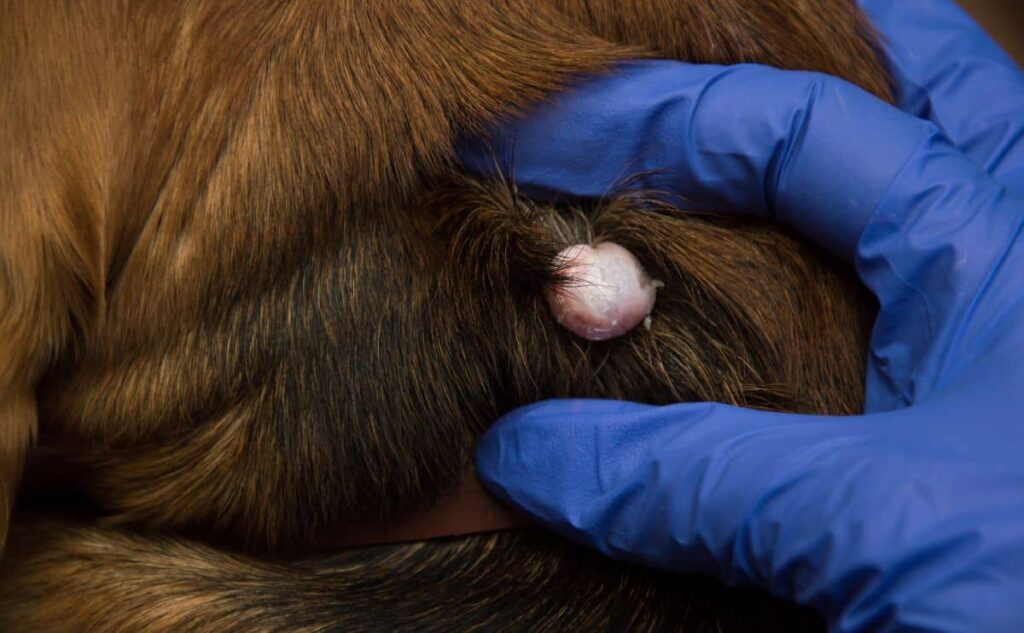
You can’t tell what a lump is by looking at it or feeling it. Even veterinarians can’t. That’s why Dr. Ettinger created a simple guideline for pet parents called See Something, Do Something:
- See something: a lump the size of a pea (about 1 cm) or larger that has been there for a month.
- Do something: take your dog to the vet to have it checked.
Usually that means a fine needle aspirate. Your vet uses a small needle to collect a few cells from the lump and looks at them under a microscope. It’s quick, and many dogs barely notice.
Dr. Ettinger also points out that smaller lumps can be checked too. The pea is just the point where you shouldn’t wait any longer.
Lumps worth a closer look under the jaw
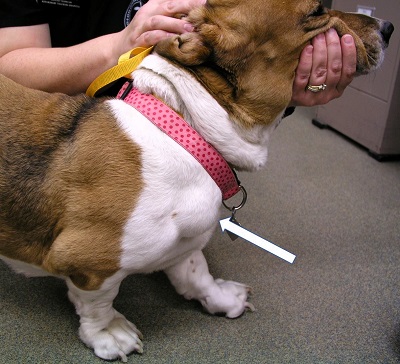
Some lumps aren’t on the skin at all. Swollen lymph nodes can be an early sign of lymphoma, one of the most common cancers in dogs, which the AAHA says accounts for about 20% of canine cancer cases. Purdue University’s veterinary cancer researchers describe an affected lymph node as a firm, rubbery lump that usually isn’t painful.
The easiest nodes to feel are under the jaw and behind the knees. Swollen nodes can also come from an ordinary infection, so a vet visit is the only way to know. (Fun timing: November 7 is National Canine Lymphoma Awareness Day.)
What happens when a counselor notices something
If one of our counselors finds a new lump or anything else that seems off, we let you know right away. From there, you and your vet take the lead. We’ll never diagnose, and we won’t tell you whether to worry. What we can do is be an extra set of eyes and hands that cares about your pup.
Make lump checks part of your routine
You can do this at home, too. Once a month, during a cuddle on the couch:
- Run your hands slowly over your dog’s whole body: head, neck, chest, belly, legs, tail and between the toes.
- Gently feel under the jaw and behind the knees.
- If you find something, note the date and the size (compare it to a pea, a grape or a coin), or snap a photo next to a coin for scale.
- If it’s pea-sized or bigger and still there a month later, or if it grows or changes, call your vet.
Your dog will just think it’s a really good massage.
The bottom line: a lump isn’t a reason to panic, but it’s always a reason to check. If your counselor ever mentions one, it’s because we love your dog too.
This post is for general information and isn’t veterinary advice. Always talk with your veterinarian about any changes in your dog’s health.